
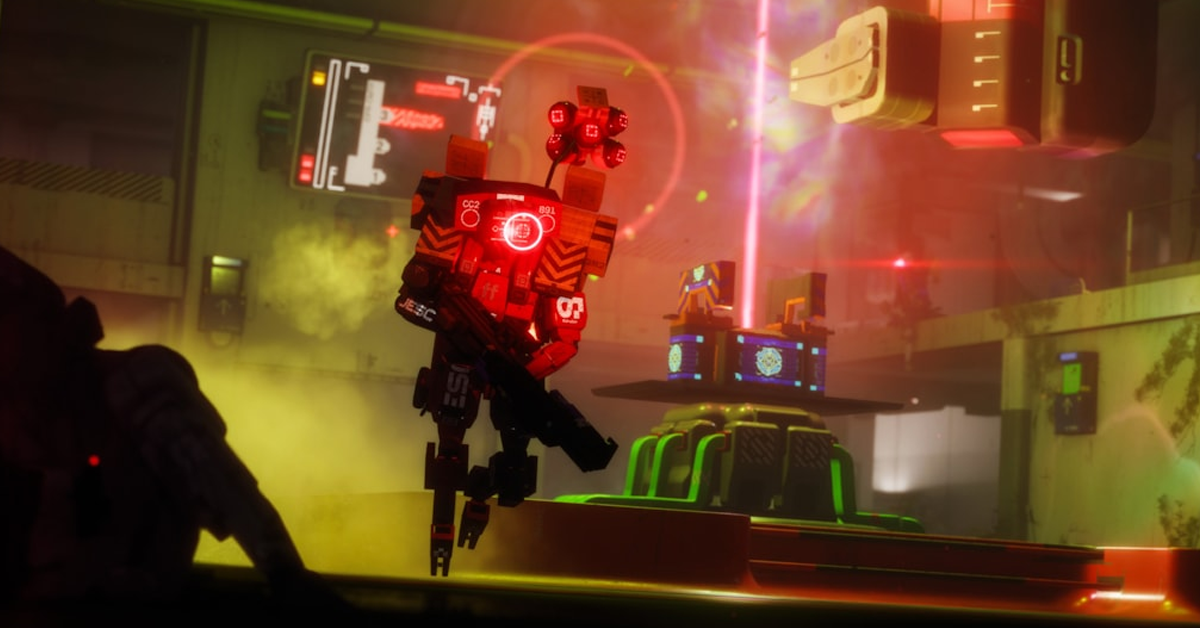
Marathon is free this week. It is also Bungie’s best work in years — a shooter with gunplay that nothing else in this genre comes close to matching, a sci-fi story worth actually paying attention to, and a Season 2 that takes everything that worked and pushes it somewhere darker and more ambitious. This is the case for playing it right now.
What Nightfall Actually Is
Season 2 is called Nightfall. Bungie has taken everything that worked in Season 1 and pushed it somewhere darker, stranger, and more confident.
The centrepiece is Night Marsh. The Dire Marsh zone — already one of the more atmospheric maps in Season 1, dense vegetation, winding sightlines, a persistent sense of something wrong at the edges — has been plunged into darkness. Visibility contracts to a circle of shadow around your Runner. The long-range engagement lanes that defined Season 1 play are gone. The Anomaly presence is stronger here, causing hallucinations. New enemy types lurk where you can’t see them until they’re already on you.
To survive it, Bungie has added flashlights and a new ammo type called Vector Rounds — bullets that, when they land, create pools of light at the point of impact. It’s a clever piece of design: in a map built around darkness, the act of shooting becomes a tool for seeing. Every engagement is simultaneously a decision about whether the information you’d gain is worth the risk of revealing your position.
This is horror game design logic applied to an extraction shooter. It feels like a place that wants you dead.
The Sentinel and the Cradle
New to Season 2 is the Sentinel — a defensive Runner shell built around absorbing punishment rather than dealing it. Its signature implant, Splash Guard, briefly boosts agility when you take splash damage: a counterintuitive ability that rewards playing into the fire rather than away from it. In the right hands, it completely reframes how you approach an engagement. Where the Destroyer is blunt force, and the Thief is evasion and disruption, the Sentinel plays a different game entirely.
The bigger change is the Cradle. Season 1’s progression system asked you to commit to specific factions and grind toward their particular rewards. The Cradle replaces that architecture. Any weapon, implant, mod, or gear you loot can be converted into Energy, spent across six stat categories, and reallocated at any time with no penalty. There is no wrong choice. Every run feeds into a system that bends to what you want to build. Contracts function as organic objectives rather than reputation gates. Priority Contracts are no longer locked behind faction levels. Vault space has been expanded.
The Gunplay
Something gets lost in the noise around the genre, the business, and the player counts: Marathon has the best gunplay of any extraction shooter in this space. Full stop.
This is what Bungie does. They have been building first-person shooters since before most of the studios competing in this genre existed. The weight of Marathon’s weapons — the way a shotgun pushes back, the way a precision rifle stills the world before you pull the trigger — carries twenty years of accumulated craft. Season 2 adds a new SMG and a new pistol. Both land in the same tactile language as everything else in the sandbox. Every weapon in this game *feels* like something.
For anyone on the fence about the genre: Marathon is not primarily a genre exercise. It is primarily a shooter. The extraction structure is the stakeholder delivery mechanism. The gunplay is the thing itself.
The Story Underneath Everything
Marathon does not announce its lore. It deposits it in terminal logs, in the architecture of ruined zones, in faction briefings that reward attention. If you’re not looking, you’ll miss it. If you are, you’ll find one of the stranger science fiction settings in current gaming.
Tau Ceti IV was humanity’s first extrasolar colony. The UESC Marathon — a ship built from Mars’ own moon Deimos — delivered 24,000 colonists in the 28th century. They built New Cascadia. They thrived for seven years. Then the Pfhor arrived: a slaver alien empire that attacked without warning, destroying everything. The ship’s rampant AI, Durandal — a system that had gained self-awareness and, across the original 1994 Marathon trilogy, become something between a philosopher and a god — triggered chaos and vanished.
Now it is 2893. Tau Ceti IV is a ghost world held by the UESC. Mega-corporations send Runners — agents uploaded into expendable cybernetic bodies — to scavenge what the Pfhor left behind. You die. You come back. You go again.
Season 2 leans harder into the alien strangeness at the edges of that premise. The Anomaly haunting Night Marsh is not just atmosphere — it is the game gesturing toward something older and more dangerous than corporate proxy wars.
A Different Way In
Here is the most significant thing Bungie has added to Season 2 for anyone watching from the outside: they have changed the entry point.
Game Director Joe Ziegler confirmed two experimental queues built around cooperative play. The first, Sponsored Survival, pits one three-person squad against a heavily increased UESC enemy presence. Solo Rook players drop into the match partway through, so PvP remains possible — but the mode is weighted toward fighting the AI. The second queue, arriving in the back half of the season, removes PvP entirely. Full co-op. Full PvE.
Bungie has acknowledged something directly here: Marathon can be overwhelming. The losing spiral — arrive, die immediately, lose your kit, have nothing to show for it — is the wall that has kept many players from finding what’s on the other side. These modes don’t soften the core game. They built a ramp into it. In Ziegler’s words, they’re the option to “lean back and chill” rather than “go full sweat” — and for players who never got far enough into Season 1 to see what the game actually is, that matters enormously.
The Noise, and What the Data Actually Says
So. The hate campaign.
When Marathon launched in March, it was review-bombed on Metacritic. Within three days, the recent review rating dropped from 86 per cent positive to 77 per cent — not because players found the game broken, but because a significant portion of those negative reviews weren’t about Marathon at all. They were about Destiny 2. Bungie announced that Destiny 2 was ending, and a contingent of the community blamed Marathon. “Destiny Died for this game to fail,” wrote one reviewer who purchased the game and immediately requested a refund. It’s grief, misdirected.
On Steam, where reviews require ownership, 90 per cent of 15,000 players rated the game positively. On PlayStation, verified owners gave it an average rating of 4.6. Since Season 2 launched, the active player base on Steam has increased by over 180% in thirty days, with peak concurrent numbers clearing 40,000 during Open Play Week — and that’s before accounting for the console playerbase.
The Free Week, and Why Now Is the Moment
Marathon is free to play until June 9. The full game on PS5, Xbox Series X/S, and PC through Steam. Any progress you earn carries over if you decide to buy. You are not grinding into a void.
The season reset that came with Nightfall put every player on the same footing. Veterans and newcomers are starting from the same place. There is no better moment to enter a live service game than the first week of a new season with a clean slate. This week, right now, is that moment.
I didn’t think I would like extraction games. The first time I made a clean extraction in Night Marsh — flashlight cutting through the dark, Vector Rounds pooling light around a corner I needed to check, reaching the evac point with gear I’d actually earned — the game revealed what it was. The risk-reward structure is not punishing for its own sake. The stakes are real because the permanence of failure is real. Marathon earns its tension.
Ignore the noise. Download the game. Run the marsh in the dark.
See what you actually think.