
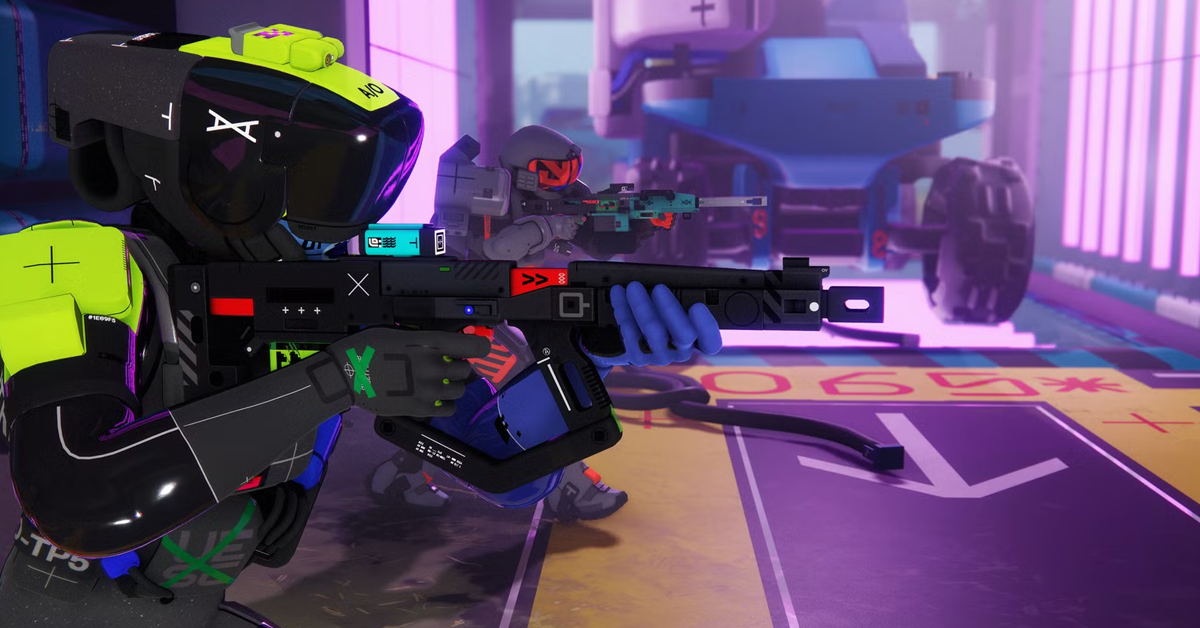
The new gameplay footage for Marathon does more than show off visuals—it reveals the game’s core identity. Marathon isn’t aiming to be just another PvP extraction shooter; instead, its complexity and unpredictability set it apart. The gunplay is sharp, the visuals clean, and signature Bungie effects pop. But the real story is how chaos, not polish, anchors every encounter.
What stands out most is that the gameplay feels unpredictable rather than rehearsed. Teams clash unexpectedly, AI raises the pressure, and support abilities shift outcomes. Most telling of all is players’ hesitation; this hesitation signals a game not about pure victory but about managing chaos and uncertainty. Marathon’s uniqueness lies in this volatile environment where every success depends on adaptability, not just skill. This focus on chaos is most clear when examining how Marathon approaches combat as a whole.
The Combat Isn’t Scripted, It’s Systemic Pressure
The firefight in the Pinwheel is the clearest example of what Marathon seems to be building. At first glance, it looks like a raid encounter. Waves of enemies flood in. Objectives require coordination. Buttons need to be hit. Teams call out flanks. It almost feels like a structured six-person activity. But it isn’t structured at all — and that’s the point.
AI enemies keep spawning, bringing in reinforcements and raising the stakes. There’s never a clear moment when the room is safe. Hazards like heat punish players who stay in open areas too long. At the same time, other squads are working on different objectives, so a PvE fight can suddenly turn into a PvP problem. This layered pressure keeps things unstable.
Unlike traditional PvE, where chaos decreases as players master content, Marathon embraces volatility as its trademark. The goal isn’t to erase tension—you must manage it. Marathon’s identity is rooted in a fluid, reactive battlefield, defined by systemic pressure and uncertainty.
The Med Drone Is More Than a Support Tool
The Triage med drone isn’t just a healing device; it’s a subtle social mechanic. In the footage, it distributes consumables like Cardio Kick, helps players endure intense encounters, and even enables long-range revives. The drone appears dependable, with notable healing effects. But the biggest surprise is that non-crew players, called Rooks, can hack the drone to gain its benefits.
In most PvP shooters, support abilities are strictly squad-bound. They reinforce team cohesion internally. Marathon appears to break that rule. If a nearby Rook can hack your drone and benefit from its healing, then support becomes negotiable. Suddenly, there’s an incentive to coexist — even temporarily. You might not trust them. You might not plan to extract together. But for thirty seconds, you could be aligned.
That’s a risky design choice. It adds uncertainty to a genre that usually has clear rules: shoot or be shot. Instead, Marathon seems to ask, what if you don’t shoot? What if you work together just long enough to survive the AI pressure? This kind of unexpected teamwork could become one of the game’s main features. It’s the sort of mechanic that sets Marathon apart from more rigid extraction games.
Rooks, Ambiguity, and Trigger Discipline
One of the most interesting moments in the footage isn’t a flashy move or a big explosion. It’s a pause. A player almost fires but stops, because the figure in front of them might be a Rook—another player not on their squad who looks similar to certain AI or enemies. Rooks’ appearance and presence create uncertainty, forcing players to be careful.
In most competitive shooters, you’re trained to eliminate movement instantly. Reaction time is king. Marathon disrupts that instinct. You have to confirm intent. You have to read positioning. You have to assess whether someone is flanking you — or flanking with you. That ambiguity infuses every engagement with psychology.
Rooks aren’t merely AI helpers or background elements. Instead, they act as active agents who can truly impact battles. They might assist, exploit hacked support tools, or become threats as circumstances change. This ongoing uncertainty intensifies every hallway encounter and open-area fight.
And here’s the key: tension created by uncertainty is stronger than tension created by difficulty alone. When you don’t fully understand the intentions of the players around you, every decision becomes heavier. Every push becomes a gamble. Marathon seems deliberately designed around that emotional weight.
Information Visibility and Tactical Uncertainty
The revive system shown in the footage reveals another layer of depth. Red locks on loot bags indicate whether a downed player can be revived. That piece of information might seem small, but in an extraction environment, visibility dictates aggression. If you know for certain that a team cannot recover their teammate, you can push confidently. If that information becomes hidden or delayed, every decision becomes clouded with doubt.
Information warfare is a key part of extraction shooters. It’s not just about aiming; it’s about what you know. Who’s still alive? Who’s down? Who can be revived? Who gets to extract first? How clear or hidden this information is changes how every fight plays out.
If Bungie chooses to limit visibility at launch — for example, hiding revive status from enemies — fights will become even more psychological. Teams will hesitate before committing. They’ll question whether a downed opponent is truly out of the fight. And that hesitation increases tension exponentially. In Marathon, UI decisions aren’t cosmetic — they’re strategic.
Marathon Isn’t Designed to be fair; it’s Designed to Be Volatile
The main takeaway from this footage is Marathon’s design philosophy: chaos over fairness. Balance isn’t the primary goal—instead, the game embraces unpredictable encounters. You may face overwhelming odds or unexpected losses, but you can also win through quick thinking and strategic use of abilities. This volatile design forms Marathon’s main appeal.
This kind of design might frustrate players who want fair, even matches. But extraction shooters are all about big emotional swings. The highs feel great because the lows are tough. When you finally escape after dealing with tough PvE, making a short-term alliance, and winning a wild team fight, that win feels earned in many ways—not just because of your skills.
If this gameplay holds true at launch, Marathon’s identity is clear: it’s defined by pressure, volatility, and unpredictability. It isn’t just about PvP or PvE—Marathon is where chaotic, social, and reactive systems combine to keep players on edge. This is what sets Marathon apart as a landmark shooter.
Share your thoughts about the new gameplay in the comments.