
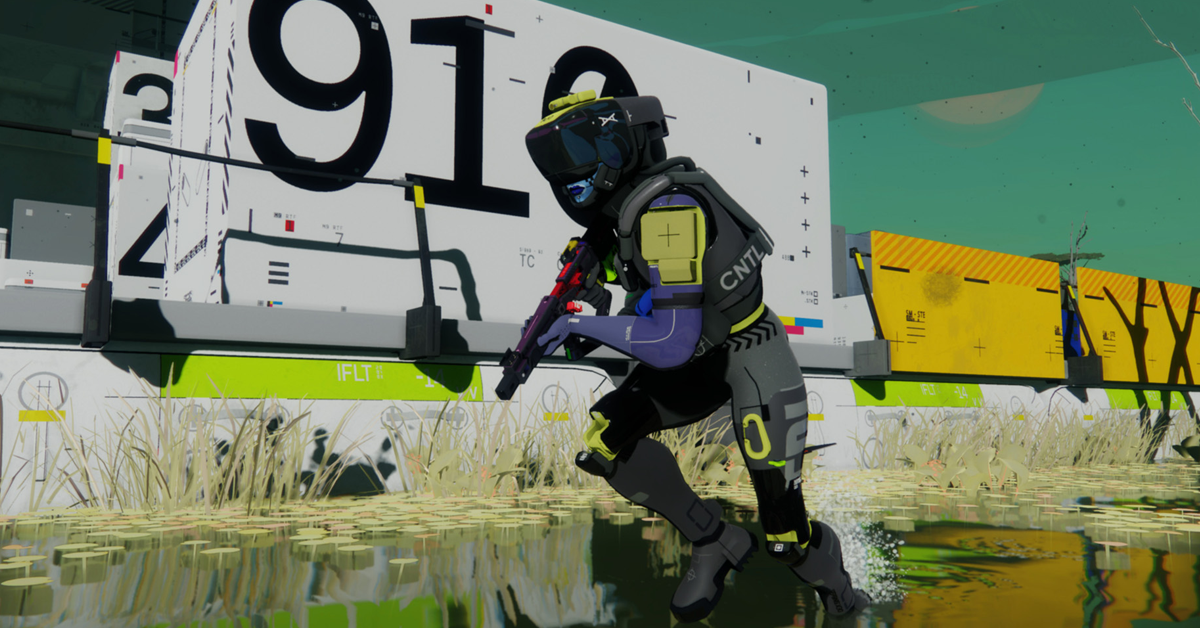
With the launch coming up soon, Bungie’s leadership team has given us one of the clearest looks yet at what Marathon is all about.
In an interview with Republic DG, Game Director Joe Ziegler, Senior Art Director Brian Vinton, Creative Director Julia Nardin, and Audio Director Chase Combs answered some of the biggest questions from the community.nd what stood out to me is what their answers reveal about Bungie’s long-term philosophy. What we’re seeing is a deliberate attempt to redefine how tension, fairness, and consequence can coexist in a modern extraction shooter.
Today, I’ll break down the Marathon team interview and explore its key takeaways, moving from combat philosophy to risk and reward, PvE vs PvP, dynamic world events, and more.
Combat Philosophy
Joe Ziegler made something very clear from the outset: gun-based gameplay remains the star of the show. Bungie knows exactly what players expect from them. The studio built its legacy on tight, responsive, satisfying shooting mechanics, and that DNA isn’t going anywhere. Movement, targeting, weapon feel — all of it has been refined extensively to ensure that combat feels fluid, whether you’re playing on controller or mouse and keyboard.
However, what makes Marathon different is how that gunplay interacts with survival systems.
This isn’t about out-gearing your opponent and steamrolling them. Bungie has intentionally capped survivability thresholds so that no armour set guarantees dominance. Positioning and first sight advantage matter. Tactical awareness matters. Decision-making matters.
The resource system supports this idea. Light ammo is cheaper, easier to find, and easy to carry, but it’s less powerful. High-impact rounds do more damage but are rare and expensive. Healing items and shields also cost more. Every fight has economic consequences, and every reload is a choice.
The message is clear: equipment helps, but nobody is invincible. Reckless aggression will get you killed, no matter how well-geared you are.
Risk and Reward
One of the most important insights from the interview revolves around match flow. While maps are designed around a roughly 25-minute timer, players ultimately control how long they stay.
You can leave early with some loot and make it out safely. Or you can stay longer, go after high-value events, hunt other teams, and fill your inventory. But the longer you stay, the higher the risk. The more you carry, the more you could lose.
Bungie understands that tension in extraction shooters is about greed, the urge to keep going, and the temptation to stay just a bit longer. To amplify that emotional push and pull.
Every session becomes a story. Did you play it safe? Did you overextend? Did another team intercept your prize? Those unpredictable narratives are what extraction players chase.
The Runner Shells
Another standout element discussed in the interview is Bungie’s philosophy behind the Runners.
Instead of seeing them as heroes, the team describes Runner Shells more like vehicles or special gear. They’re tools made for risky freelance jobs on Tau Ceti IV.
Each Shell is designed for a different approach to survival. Some are better for combat, while others focus on detection, movement, or support. This approach allows Marathon to expand long-term without locking itself into rigid class structures.
PvE vs PvP
When discussing enemy AI, Ziegler offered a realistic perspective. AI exists as a consistent, learnable environmental threat. AI enemies create pressure and resource drain. They force movement, expose positioning, and punish carelessness. But the true chaos comes from other players. Human opponents bring broader toolkits, unpredictable motivations, and constantly shifting tactics.
That balance between predictable environmental danger and unpredictable human behaviour is where Marathon’s tension lives.
Dynamic World Events
The interview also shed light on how dynamic events work within matches. While maps don’t permanently evolve mid-session in large-scale transformative ways, player actions absolutely alter the flow of a match.
The example highlighted was the messenger ship event on the Perimeter map. Players can initiate a transmission to summon a valuable loot carrier. But once that ship appears, it becomes visible to other teams.
What begins as your opportunity can quickly turn into a multi-team conflict.
This design encourages interaction without forcing it. And because they’re player-triggered, matches develop organically.
Art Direction and Visibility
Senior Art Director Brian Vinton explained that Marathon’s stylised visuals aren’t just for looks. They help make gameplay clearer.
Instead of using a dark, hyper-realistic military style, the art team uses contrast, calm areas, and highlighted details to guide where players look.
In firefights, readability matters. The team wants you to notice important gameplay details, not get distracted by too much background noise. That philosophy extends to the HUD. While some players have commented on UI density, Bungie has made it clear that the interface will continue evolving after launch.
Story and Lore
Creative Director Julia Nardin confirmed that even though Marathon doesn’t have a traditional campaign, the story is woven deeply into the world.
Tau Ceti IV is an abandoned colony filled with secrets. Text logs, audio recordings, contracts, and faction missions gradually reconstruct what happened.
And yes — Durandal returns.
For longtime Bungie fans, that’s significant. The philosophical, mysterious DNA of the original Marathon trilogy isn’t gone. It’s recontextualised within an extraction framework.
Instead of a straight story, you discover the narrative at your own pace.
Audio and Immersion
Audio Director Chase Combs described a layered approach to sound design.
They mix real mechanical sounds, pneumatic systems, and physical effects with futuristic synth tones. Every sound is processed to simulate how audio moves through space and terrain.
On PS5, DualSense haptics and Tempest 3D audio further enhance immersion. PS5 Pro support ensures crisp, stable 4K during chaotic firefights.
Seasons and Long-Term Support
The interview also clarified seasonal cadence. Seasons will last about 12 weeks. Bungie wants players to progress steadily regardless of how much they play, aiming to avoid burnout-inducing seasonal models.
New players get a structured introduction with tutorials, easier intro maps, special kits for safe learning, and adjusted matchmaking. It’s a major accessibility move in a genre known for punishing newcomers.
And with the open preview weekend running shortly before launch, Bungie is clearly confident enough to let players stress-test the systems early.
Marathon isn’t trying to be the hardest extraction game, but it’s also not making things too easy just to attract casual players. Instead, Bungie seems to be building a system where tension comes from your choices, not from gear imbalance.
Combat is still tight and responsive. Managing resources matters. The story is there without getting in the way. Accessibility features help reduce frustration but keep the stakes real.
We are just days away from seeing whether Marathon delivers on this vision.
After hearing from Joe Ziegler, Brian Vinton, Julia Nardin, and Chase Combs in their Republic DG interview, do you feel more confident? Or do you still see things Bungie hasn’t covered?
Drop your thoughts below.