
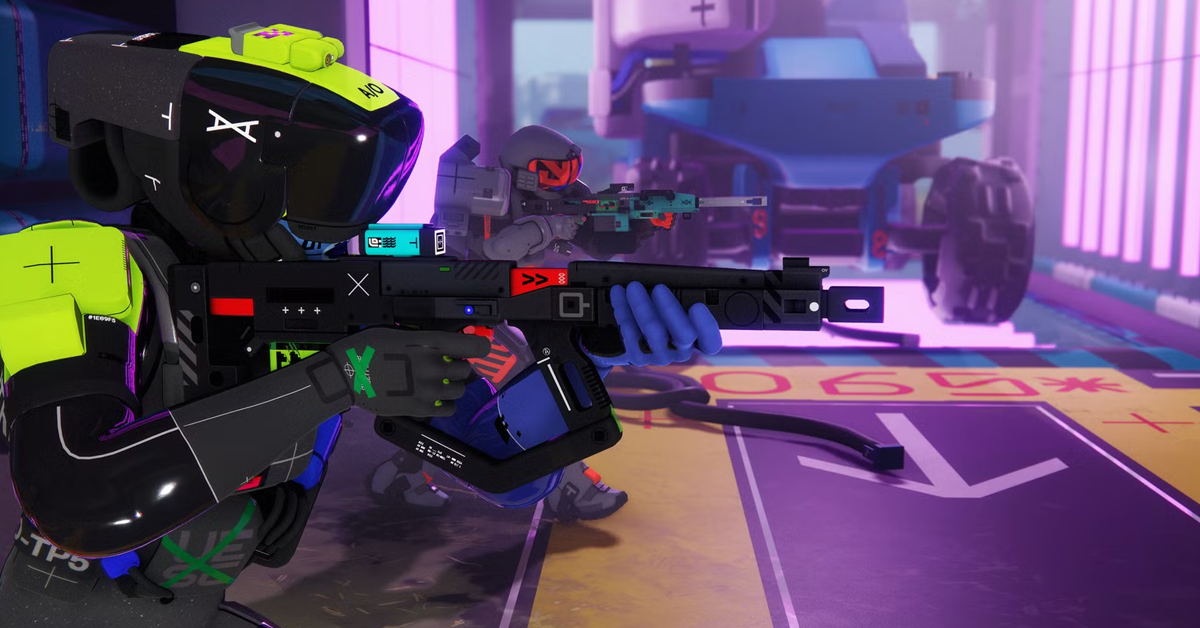
Right now, the Marathon conversation is getting dragged into the same trap every new live-service game gets dragged into: everyone wants a single number that proves it’s a hit or proves it’s dead on arrival. People want to point at a Steam chart, or a trailer ratio, or a tweet going viral and go, “See? Told you.” But the problem is simple. None of us actually know Bungie’s internal bar for success. We can all agree “big number good, small number bad,” but without context, player counts become a Rorschach test where everyone sees what they already believed.
And that’s why I want to approach this like an actual feature, not a doom thread. Because we’ve already got some early signals — top seller placement on Steam, a massive Discord, shifting sentiment around the trailers — and those signals tell a more interesting story than the usual “Concord 2.0” drive-by.
Why “Success” for Marathon Isn’t Destiny Success
Marathon is not trying to be Destiny. It’s not built to be a giant theme park with something for everyone. It’s an extraction shooter. That’s a fundamentally different pitch, because extraction games are supposed to be stressful. They’re supposed to make you hesitate at doors, second-guess your routes, and feel like every decision might end your run. In the discussion you shared, they even reference Bungie’s own target philosophy from earlier: this idea of an extraction fail rate that’s intentionally high, something like an 80/20 vibe where failure is normal and survival is earned.
If that’s the design intent, then success can’t be measured like a casual shooter. Marathon doesn’t need to win a mainstream popularity contest. It needs to build a sustainable, committed audience that loves the tension. That’s the first mental reset.
The Real Success Metrics
Metric One – Retention Is the Only Number That Truly Matters
If you want the single most important metric for Marathon, it’s not launch-day hype. It’s retention. It’s whether people play, churn, and come back anyway. Extraction games aren’t about everyone showing up; they’re about the right people sticking around. A huge spike followed by a cliff isn’t a win. A smaller, stable core that plays every week is a win — because it means the loop works, the pacing works, and the players are building habits.
This is where a lot of online discourse goes wrong, because it treats success like a single weekend. But Bungie will be watching whether the game holds a consistent population, whether matchmaking stays healthy, whether players keep chasing upgrades and contracts, and whether people talk about their runs in a way that makes others want to jump in.
Metric Two – The Beta Is a Marketing Weapon, Not a Final Exam
Regarding the open beta weekend: the timing matters, because a beta isn’t just a test, it’s a conversion moment. If you let people play and then make them wait too long, the hype leaks out. If you let people play close to launch, you create that “I want more” feeling that turns into purchases.
So success for the beta isn’t simply “how many players show up.” It’s whether the experience convinces on-the-fence players that the tension feels good, that the gunplay feels like Bungie, and that the world feels dangerous in a way that’s exciting rather than exhausting. The beta matters, but not as a scoreboard. It matters because it’s the moment when the game stops being a trailer argument and becomes a hands-on reality.
Metric Three – Sales Signal Commitment, Not Curiosity
Now, we’ve got one big talking point already: Marathon hitting the top sellers list on Steam. Whether it’s top five, top three, whatever the exact position was at the moment, the core idea holds: sales are intent. Sales are people saying, “I’m not just watching this, I’m committing.” That’s different from views, likes, or social posts, because those are cheap signals. Buying in is a real decision.
And this is also where comparisons to other games get messy. People love the narrative of “it’s either bigger than Arc Raiders or it’s a failure,” but that’s not how businesses work. There are a ton of outcomes between “genre king” and “flop,” and plenty of them are profitable and sustainable. Marathon can be successful without being the biggest extraction shooter on Earth.
Metric Four – Sentiment Shift Is Real, and You Can Actually Observe It
Sentiment is shifting, and you can measure it in ways that aren’t just “my timeline feels nicer.” When trailer like-to-dislike ratios improve, when comment sections move from pure dooming into debate, when you start seeing people push back against misinformation instead of quietly letting it spread, that’s a sign the narrative is loosening.
And this matters because communities act like evangelists, whether they mean to or not. If a game’s community only ever speaks in bitterness, outsiders assume the game is always broken. If a community starts saying, “Actually, this looks good,” or even “I was skeptical, but I’m curious now,” that’s how momentum builds. Bungie can’t fully control that — but they can feed it by consistently showing the game in a way that feels authentic.
Metric Five – Discord and Factions as a “Community Flywheel”
The Discord number — hundreds of thousands of people — is impressive, but what matters more is how Bungie is using it. Roles, faction identity, nomination mechanics, and the whole Arachnne cult vibe blowing up into memes and social energy. That’s not just a fun anecdote — it’s a real community retention engine. It turns the audience into participants.
This is important because extraction games thrive when players feel like they belong to something. Factions, ARGs, contract systems, and little “in-world” interactions create a sense that the game has a culture before it even launches. That’s not fluff. That’s scaffolding for long-term engagement, and it’s exactly the kind of thing you want to see if you’re asking what success looks like beyond launch week.
How Many Players Will Show Up for the Beta?
The Honest Answer – It Matters Less Than People Think
Yes, the beta numbers will be weaponized. If they’re high, people will declare victory. If they’re lower than expected, people will declare it dead. But that’s internet theatre. Bungie already ran extensive testing, including long playtests, and an open weekend is as much about perception and conversion as it is about stability.
A “successful” beta is one where players walk away saying, “That felt like Bungie,” and “I get why this is tense,” and “I want to play again.” If the beta creates that itch, it has done its job — even if it isn’t a record-breaking event.
What Bungie Must Nail in the Next Six Weeks
Bungie doesn’t necessarily need to do something miraculous. They need to avoid fumbling. The game is trending upward in perception, but people have limited patience for Bungie right now. If anything goes wrong — a messy beta, a confusing monetization message, a controversial decision — the backlash will be instant and loud, because there’s not a lot of grace in the tank.
So success in the lead-up looks like clean communication, consistent marketing, and no self-inflicted wounds. It looks like staying on message and letting the product speak.
Clarity on Content Cadence and Monetization
Even people deeply plugged in still don’t fully know what the longer-term content model looks like. Are there paid expansions? What does “content this year” mean? What is the seasonal cadence? Those are questions that can quietly poison goodwill if Bungie leaves them vague too long.
A lot of players aren’t scared of paying. They’re scared of uncertainty. If Bungie can clearly explain what the first year looks like — content drops, seasons, what’s included, what’s not — that stabilizes expectations and reduces the anxiety that turns into doom posting.
What Does Success Actually Look Like for Marathon?
A Realistic Success Story
A realistic picture of success for Marathon isn’t “biggest game on Steam.” It’s a strong launch that converts into consistent retention. It’s a committed community that forms its own culture through factions and story hooks. It’s stable matchmaking, steady sales, and enough momentum that Bungie can confidently invest in year two without having to panic-pivot the game into something it was never meant to be.
Marathon doesn’t need to be everybody’s game. It needs to be somebody’s main game.
If Marathon launches and players are still telling extraction stories months later — the “I shouldn’t have pushed that fight,” the “I got out with one HP,” the “we stole it at the last second” stories — that’s success. Because those stories are how extraction games grow. And the encouraging thing right now is that Bungie seems to be building toward that kind of culture: more authentic trailers, stronger world tone, faction identity, ARG engagement, and a sense that the community is starting to defend the game rather than just brace for impact.
So yes, we can watch Steam charts. Yes, we can watch beta numbers. But the real question is simple: after the hype fades, do people keep coming back? If they do, Marathon wins.