
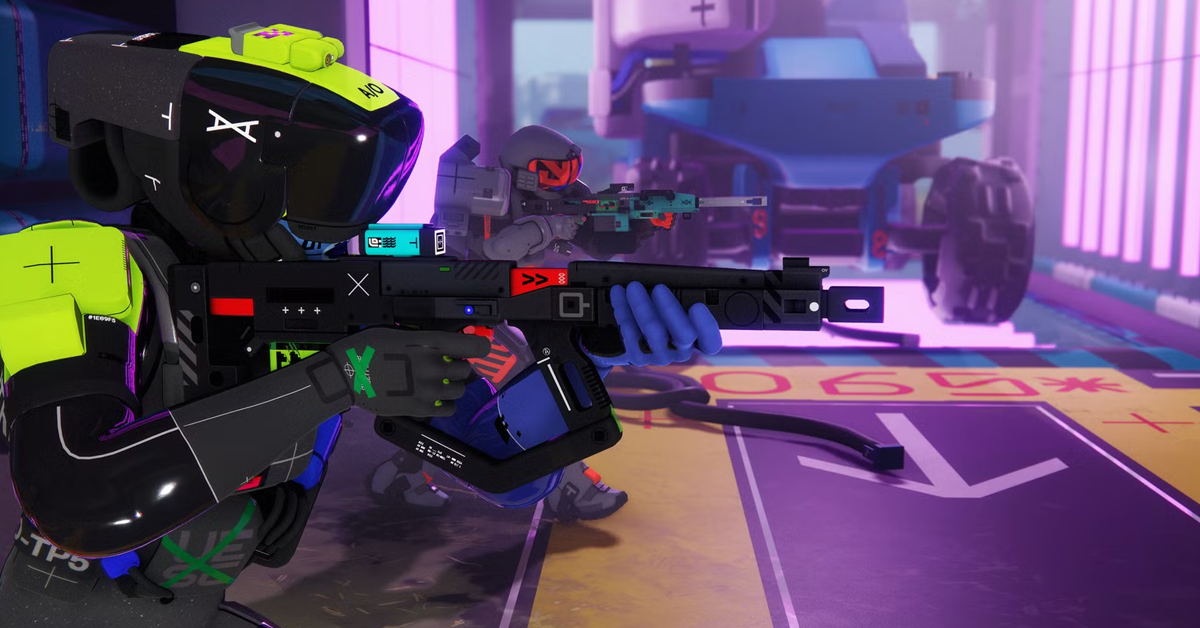
As Marathon’s launch approaches, we finally have a clear look at how its main systems work. In a detailed interview with Drewsky, combat director Kevin Giannis explained the game’s combat, Runner Shells, build crafting, gold item power, faction progression, and what it means to lose everything in an extraction shooter.
Today, we’re breaking it all down — clearly, thoroughly, and with full context. This interview fundamentally changes how we should think about Marathon, setting the stage for a closer look at its core systems.
Runner Shells – Combat Readability Comes First
One of the first big topics was Runner Shells. Kevin said the goal is to “marry abilities, passives, and stats to a distinct visual language you can read at 50 to 60 meters.” This shows what Bungie cares about most. In a PvP extraction shooter where death means losing your gear, clarity matters. You cannot afford confusion. If you see an opponent in the distance, you should be able to immediately understand the general framework of what they’re capable of.
Each Runner Shell is a survival archetype made to solve a certain problem in the game. Recon is the information expert, helping your squad avoid ambushes. Assassin is about stealth and taking out threats quickly. Triage focuses on staying alive and keeping your team in the fight, while also helping your resources last longer. Vandal is all about aggression and moving fast.
At launch, Bungie says these are just the starting points. Over time, new Runners will expand or shift these archetypes. So, Marathon’s class system is designed to grow and change with each season.
The key takeaway here is that Marathon’s identity starts with clarity. Archetype first. Customisation second. With this foundation, the next layer is built on crafting.
Build Crafting – Layers That Stack on the Archetype
Runner Shells are the base, and build crafting is the personal touch you add on top.
Kevin said build components are made to strengthen or tweak your shell’s role. Cores can make your archetype stronger or add new abilities. Implants adjust your stats and give you passives, letting you play a bit outside your main role. Weapons and mods shape how you fight in each moment.
Each build component is made to be easy to understand. You won’t see long, complicated descriptions or lots of triggers. This is practical because Marathon asks players to make decisions while running. You’ll be swapping parts while playing, often under pressure. But even though each part is simple, the ways you can combine them are not.
Kevin emphasised that the design team thought deeply about the “combinatorics” of these components. Simple pieces can come together to form powerful synergies. For example, a core that removes self-damage from knockback and propels you instead can combine with a gold implant that deals damage after a long fall. Suddenly, your movement becomes a weapon.
That’s where Marathon’s real depth comes from — from how the different systems interact in meaningful ways. This complexity becomes even more apparent when considering the risks associated with gold items.
Gold Items – Power Balanced by Risk
Gold items, also referred to as prestige items, were described in very specific terms. Kevin said that when you find a gold item, it should feel so strong that you almost “get the giggles” when you use it. Gold weapon mods create apex versions of weapons that can shift how you approach combat entirely. Gold implants provide powerful, unique passives in addition to random rolls, effectively layering ability-like enhancements into your build.
Marathon doesn’t balance power just by making things weaker. Instead, power is offset by risk.
In Marathon, death means losing gear. Gold items are rare. Inventory is limited. Stacking gold pieces makes you powerful, but you risk major loss if you fail.
Rather than reducing item strength, Bungie can adjust acquisition rates and costs. That means gold gear is allowed to be wild, explosive, and transformative — because its permanence is never guaranteed.
Weapons – Meaningful Investment
Kevin confirmed that there is a deliberate power gap between grey and purple weapons. Upgrading your weapon is meant to feel impactful. Lower rarity weapons can reach high performance levels — but require more mod investment to do so. Higher-rarity weapons start stronger but have fewer mod slots.
This creates a system where you have to make choices. Do you put a lot of effort into a flexible base weapon, or do you focus on a rare weapon that’s already strong?
Weapons also work well with your Runner Shell’s identity. If you like to play aggressively as Vandal, you’ll probably use shotguns or close-range weapons. If you prefer Recon, you might choose rifles or setups that help you track enemies.
However, Kevin made it clear that Bungie is excited about players bending these roles. There is room to create builds that intentionally clash with archetype expectations, forming unique play styles through competing design choices.
The system lets you experiment while still keeping things clear.
Progression – The Safety Net Behind the Risk
This might have been the most important part of the whole interview. One of the biggest fears in extraction shooters is gear loss. If you finally find a build that resonates with you, what happens when you lose it? Can you realistically recreate it? Kevin explained that faction progression plays a massive role here.
Some build parts can be replaced quickly, but rare items take longer to get back. With faction upgrades, you can unlock guaranteed ways to get certain components. As you invest in factions, you can buy items directly, boost your runner’s base stats, and unlock armory upgrades for higher-tier gear.
Most importantly, these faction upgrades last for the whole season. You don’t lose them if you die.
This gives Marathon two progression tracks: temporary gear power and persistent seasonal upgrades. That raises your “failure floor.” You never restart from nothing.
Runner Stats – The Final 25% of Identity
Each Runner Shell has base stats that support its main role. Vandal is built for agility. Recon gets more heat capacity to keep tracking tools running. Other shells focus on staying alive or managing resources.
Stats make up the last 25% of your build’s identity. They help you fine-tune how you handle common situations. If you fall a lot, you might invest in reducing fall damage. If you overheat, you can boost your heat capacity or recovery.
Stats are not flashy, but they are the fine-tuning layer that separates a good build from a mastered one.
Rook – Low Stakes, High Utility
Rook exists as a low-stakes entry option. Designed as a scavenger, Rook’s kit reinforces survival and subtlety. Abilities like signal masking help avoid certain threats, and passive regeneration supports scraping in high-risk environments.
Importantly, even Rook benefits from faction upgrades. You can improve starting loadouts and increase viability over time. This makes Rook not just a beginner option but also a strategic fallback for rebuilding after losses.
Once again, progression connects all the systems, reinforcing that each part of Marathon’s design is intentionally linked. Bringing all these ideas together yields important insights.
Final Thoughts
This interview showed something important about how Marathon is designed.
It’s a whole system built around managing risk.
Runner Shells provide clarity.
Build components create depth.
Gold items deliver explosive power.
Loss enforces tension.
Faction progression protects long-term identity.
Every system feeds into another.
If Bungie pulls this off, Marathon could find a rare balance for extraction games—making power exciting, loss meaningful, and progression lasting. And that balance, more than any weapon or Runner, could decide if Marathon succeeds.