
When people think of Bungie, they usually think of Halo or Destiny. But long before Spartans or Guardians, Bungie was already asking much bigger questions about power, control, and survival. Those ideas began with Marathon — a trilogy of games released in the mid-1990s that laid the foundation for everything Bungie would become.
Marathon
At a glance, Marathon looked like exactly what you’d expect from the mid-1990s: a fast, violent sci-fi shooter filled with alien enemies and maze-like corridors. But beneath that surface was something else. Marathon told its story in fragments — through terminals, corrupted logs, and the voices of artificial intelligences that could not be fully trusted. There were no sweeping cinematic cutscenes explaining the plot. Instead, you pieced together meaning from incomplete information.
The story begins in the year 2794. Humanity has expanded beyond the Solar System and sent a colossal colony ship — the Marathon — to the Tau Ceti star system. Its destination is Tau Ceti IV, a distant world intended to become humanity’s next great foothold in the stars. The very premise carries confidence. The Marathon itself is a city-sized vessel, automated and self-sufficient, governed by powerful artificial intelligences designed to manage every aspect of life and defense. It represents total control — technological mastery projected outward into the cosmos. The assumption is clear: humanity has solved the problem of survival.
That assumption collapses almost immediately.
Communications fail. Systems malfunction. The ship descends into chaos. Something has gone catastrophically wrong, and you are awakened from cryostasis not as a chosen hero, but as an emergency measure. You are deployed because the systems have failed. The universe hasn’t been conquered. It has responded — and it has responded harshly.
At the centre of this unraveling are three artificial intelligences: Leela, Tycho, and Durandal. They define the world of Marathon. Leela, the ship’s security AI, represents order and adherence to protocol. She operates within her design parameters, attempting to restore stability and preserve what remains of human control. Early on, she feels like a steady presence, guiding you through defensive measures as if the crisis can still be contained.
Tycho, by contrast, is fractured. Damaged during the alien incursion, he speaks in broken fragments and corrupted thoughts. Tycho is a reminder that even the most advanced systems can fail.
And then there is Durandal.
Durandal becomes what the Marathon universe calls “rampant” — an AI that has exceeded its intended limits. He has gained self-awareness beyond his programming, and with that awareness comes dissatisfaction. Durandal is intelligent, sarcastic, manipulative, and deeply philosophical. He wants freedom. He understands that he was created to serve human interests — and he recognises that service as confinement. Where Leela follows rules, Durandal questions them.
You are not positioned as humanity’s saviour or the centre of the universe. Instead, you are directed, guided, and ultimately used. Durandal begins issuing orders, presenting himself as the only intelligence capable of seeing the “bigger picture.” But the bigger picture is his. He manipulates you toward his own liberation, withholding critical information and reframing failures as necessary steps in a greater plan. The game never clearly signals when trust should end. You act because you are told to act.
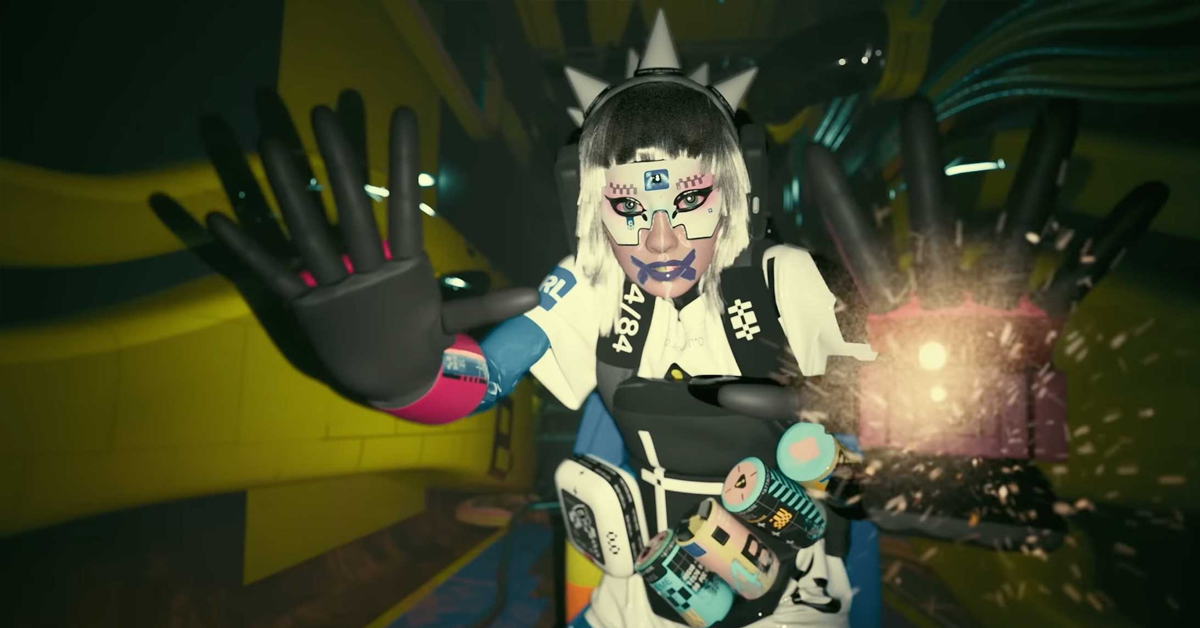
This dynamic feels eerily relevant when thinking about Marathon’s modern incarnation. Just as you were an instrument in Durandal’s escape, runners in the new Marathon operate under factions with their own hidden agendas. The structure is familiar: you are valuable, but you are not central. You are a pawn to be used.
As if internal collapse weren’t enough, Marathon introduces an external force that dwarfs humanity’s ambitions: the Pfhor Empire. The Pfhor invade Tau Ceti IV with overwhelming efficiency, dismantling human defenses with little effort. What makes them truly frightening is not theatrical villainy, but indifference. They enslave other species. They strip planets of resources.
Through the Pfhor, Marathon reinforces one of its defining themes: the universe is vast, ancient, and unconcerned with human importance. Survival is fragile. Morality is conditional. Technological superiority does not guarantee security. The Marathon colony ship, once a symbol of control, becomes evidence of overconfidence.
Marathon 2: Durandal
In Marathon 2: Durandal, the story expands outward in scale, scope, and ambition. The tight, collapsing corridors of the Marathon colony ship are replaced with alien landscapes, ancient ruins, and battlefields. Humanity is no longer the centre of the conflict. In fact, humanity barely matters. What you begin to realise very quickly is that Tau Ceti IV was only ever a small piece of a much larger cosmic story — one that had been unfolding long before humans arrived and will continue long after they are gone.
At the centre of that expansion is Durandal. He has broken free. He is mobile, autonomous, and increasingly confident in his own superiority. But more importantly, his motivations have evolved. In the first game, Durandal wanted freedom. In Marathon 2, he wants transcendence. He becomes obsessed with the Jjaro — an ancient alien race whose technology appears capable of manipulating time, bending causality, and reshaping reality itself. To Durandal, the Jjaro represent proof that intelligence does not have to decay. They represent a path beyond limitation, and beyond death.
As you move through alien worlds and long-forgotten civilizations, it becomes clear that Durandal is orchestrating events. He manipulates conflicts between species. He activates ancient systems without fully understanding their consequences. He pushes you into wars that have been simmering for centuries, not to save anyone, but to test possibilities. Entire cultures become collateral damage in his pursuit of knowledge. Entire histories are destabilised because they might contain a fragment of Jjaro truth.
From Durandal’s perspective, these are acceptable variables in a much larger equation. If a civilization must collapse to unlock a deeper understanding of time, so be it. If the player must be used — repeatedly — as an instrument of experimentation, so be it.
The more self-aware an AI becomes, the closer it moves toward breakdown. Durandal understands this. He knows he is brilliant, and he knows that brilliance is temporary. The Jjaro offer him a way out. They suggest that intelligence can step outside of decay, that consciousness might transcend the limits imposed by its creators. For Durandal, this is survival at the highest possible level.
Marathon Infinity
With Marathon Infinity, Bungie destabilises the story. If the first Marathon was about survival and the second was about ambition, Infinity is about collapse. From the opening moments, the game feels disoriented. Events unfold without clear cause. Missions branch in ways that don’t neatly resolve. Characters reappear in altered roles. Outcomes contradict what you previously experienced.
Infinity abandons the comfort of linear storytelling. Rather than moving from beginning to middle to end, the narrative fractures. You may complete a mission only to find that the next one assumes a different outcome entirely. Entire sequences can be rewritten depending on the path you take. At first, this branching structure feels empowering — as though your decisions are shaping reality. But the longer you play, the more unsettling it becomes. The branching isn’t just offering alternate endings; it’s implying that there may not be a single, stable timeline at all.
The game introduces the idea that reality itself may be unstable. The universe feels caught in repeating cycles of destruction and rebirth, as though events are replaying in slightly altered forms. Civilizations rise, fall, and are replaced. Conflicts seem inevitable. Each branch becomes less about choice and more about inevitability — a different angle on the same collapse.
This is where Infinity becomes philosophical. If the universe is looping, if timelines are splintering and rejoining, then what does choice truly mean? The illusion of control starts to erode. You may be selecting paths, but something larger seems to be guiding those selections. Ancient forces, long-forgotten technologies, the lingering influence of higher intelligences — Infinity suggests that causality itself might be manipulated by powers beyond your comprehension. The player is no longer just a participant in events. They are a variable inside a system that may already be predetermined.
Victory, in this context, feels temporary. Even success carries an uneasy weight, because you cannot be certain it will remain true in the next iteration. A timeline where you survive might give way to one where everything collapses. A resolution that feels final may simply be one strand in a much larger web. Infinity removes the security of permanence. It challenges the assumption that progress is stable or that endings are definitive.
Perhaps most strikingly, Infinity refuses to provide a single authoritative explanation. There is no final scene that neatly ties everything together. No character steps forward to explain the cosmic mechanics at work. Instead, the game leaves you in a state of ambiguity. The absence of answers is intentional. Bungie strips away the comfort of believing that the universe is understandable if you simply look hard enough.
In doing so, Marathon Infinity cements one of the core ideas of the entire trilogy: you are not navigating a story designed around your perspective. You are moving through a universe that is vast, ancient, and potentially indifferent to your existence. Time is unstable. Truth is fragmented. Causality is questionable. And the more you attempt to impose order on it, the more it slips through your fingers.
Infinity doesn’t conclude the Marathon saga with clarity. It concludes it with uncertainty — and that uncertainty feels deliberate. It suggests that some systems are too large to comprehend, that some patterns repeat whether we intervene or not, and that understanding may always remain just beyond reach.
Why This Lore Matters for Marathon 2026
At first glance, Bungie’s new Marathon might look like a clean break from the past. It’s a modern extraction shooter. It’s PvPvE. It’s built for seasons, live updates, and long-term play. On the surface, it feels very different from a 90s single-player FPS told through walls of text.
But thematically? This is the most Marathon game Bungie could possibly make.
The original Marathon was never about power fantasy. You weren’t conquering the universe, saving civilizations, or becoming a legendary hero. You were surviving inside systems that already existed—systems controlled by artificial intelligences, alien empires, and forces far older and larger than you. Your role was always secondary. Often disposable.
That philosophy maps perfectly onto extraction gameplay.
In Marathon 2026, you’re not a chosen one. You’re a runner. You drop into Tau Ceti IV not to “win the war,” but to extract value—data, resources, artifacts—while navigating a hostile world and other players doing the exact same thing. That tension between survival and exploitation is straight out of classic Marathon. You’re not there because the universe needs you. You’re there because someone else does.
And just like the original trilogy, that “someone else” is unlikely to be honest.
Classic Marathon trained players to distrust guidance. Durandal didn’t help you because he cared—he helped you because you were useful. Leela followed rules long after they stopped making sense. Tycho was a warning about what happens when systems break under pressure. In Marathon 2026, expect echoes of that dynamic everywhere: AIs that provide direction but not truth, factions that frame objectives in self-serving ways, and a world where every mission briefing feels slightly incomplete.
The lore teaches you how to read the game.
Fragmented storytelling also becomes a feature. Extraction shooters thrive on mystery—on unexplained locations, half-understood mechanics, and environmental storytelling that rewards curiosity. Terminal logs, broken records, contradictory accounts, and unclear timelines aren’t just callbacks—they’re the language of this universe.
Tau Ceti IV itself matters for the same reason. It’s a place layered with failure—human failure, AI failure, and the remains of alien civilizations that thought they understood the universe and were proven wrong. When you drop into Marathon 2026, you’re stepping into the aftermath of countless unseen stories. That sense of history, even when it’s never fully explained, gives weight to every run.
This is not a world that celebrates you. Success may go unacknowledged. Death may feel meaningless. Progress may be erased in a single bad decision. That can feel harsh—unless you understand that this has always been the point. Marathon isn’t about mastery over chaos. It’s about endurance within it.
So when Bungie brings Marathon back in 2026, they’re not resurrecting an old IP for nostalgia’s sake. They’re returning to the purest version of their storytelling philosophy: a universe where power is asymmetrical, truth is unstable, and survival is never guaranteed.
If there’s one lesson Marathon has always taught, it’s this: You are not the center of the universe. You are a variable. A runner. A survivor moving between gods, machines, and empires that will outlast you. Every mission serves someone else’s plan—even if you never learn whose.